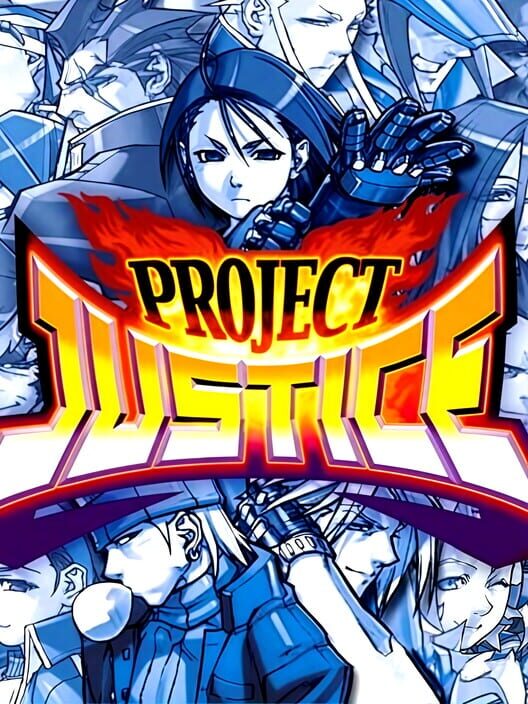
Project Justice Cover

IGDB / 13096

Project Justice

2000 81 / 100 Fighting
Project Justice is the sequel to Rival Schools: United By Fate. Project Justice's fighting system is lifted from the original Rival Schools, with some notable changes. The game continues to be a team fighter, but has teams of three characters instead of two. This allows another Team-Up attack to be used in a fight, but also adds a new type of attack, the Party-Up, initiated by pressing any three attack buttons. The Show full summary

Project Justice is the sequel to Rival Schools: United By Fate. Project Justice's fighting system is lifted from the original Rival Schools, with some notable changes. The game continues to be a team fighter, but has teams of three characters instead of two. This allows another Team-Up attack to be used in a fight, but also adds a new type of attack, the Party-Up, initiated by pressing any three attack buttons. The Party-Up is a three-person attack that varies based on what school the character initiating the attack is from. The additional partner also allows players to cancel an opponent's Team-Up Special by inputting a Team-Up command of their own. This initiates a short fighting sequence between one character from each team. If the person initiating the sequence gets the first successful hit in during the sequence before time runs out, the Team-Up they are caught in will be canceled, and the game switches back to the main fight; if the opposing player gets the first hit or time runs out, the Team-Up continues as usual. Additionally, the 'vigor' meter in Project Justice is limited to 5 levels (down from 9 in Rival Schools), with Party-Ups requiring all 5 levels, Team-Ups continuing to cost two levels, and any attempts (successful or not) to cancel a Team-Up costing one level. Also carrying over from the first game, the Dreamcast port of Project Justice in Japan includes a character creation mode that allows a player to create their own fighters who can be used in all modes except for single-player. However, the character creation in Project Justice is packaged as a board game, taking place during an inter-school festival, rather than a date sim game like in Rival Schools. As with School Life Mode in the original Rival Schools, though, this boardgame is not included in non-Japanese ports of Project Justice due to the amount of time it would take to translate the mode. Instead, several unlockable sub-characters were included in these ports, built from the character creation parts in the Japanese version.

World design Linear ExperienceChoices GameplayCombat-focused Game modeMultiplayer

Deep dive / Spielprofil

Everything about Project Justice: story and gameplay

A structured look at the narrative, game feel, and traits that define this game.

Story & context
One year has passed since the events of Rival Schools: United By Fate and that things have gone back to normal in Aoharu City. Batsu Ichimonji, Hinata Wakaba, Kyosuke Kagami, and the rest of the fighters had resumed their normal school lives and that all of them had enjoyed the calm peace that came after their last adventure, but the peace itself doesn't last for long and that the fighters would soon find themselves getting involved in a new struggle. Kurow Kirishima: a cold-hearted and ruthless ninja assassin from a mysterious group known only as the "Reverse Society" has his sight set on the Imawano family and plans to eliminate them and their allies so that he can prepare for the advancement of his own ambition to rule Japan. To this end, he attacks Raizo Imawano: the principal of Justice High and father to Batsu, so that he can easily put him out of commission and not have any inter Show full description

One year has passed since the events of Rival Schools: United By Fate and that things have gone back to normal in Aoharu City. Batsu Ichimonji, Hinata Wakaba, Kyosuke Kagami, and the rest of the fighters had resumed their normal school lives and that all of them had enjoyed the calm peace that came after their last adventure, but the peace itself doesn't last for long and that the fighters would soon find themselves getting involved in a new struggle. Kurow Kirishima: a cold-hearted and ruthless ninja assassin from a mysterious group known only as the "Reverse Society" has his sight set on the Imawano family and plans to eliminate them and their allies so that he can prepare for the advancement of his own ambition to rule Japan. To this end, he attacks Raizo Imawano: the principal of Justice High and father to Batsu, so that he can easily put him out of commission and not have any interference come from him. Secondly, he sends both his older sister Yurika Kirishima and his loyal subordinate Momo Karuizawa into the ranks of the fighters so that the two of them can cause tension and distrust to occur between the friends. His third plot involves brainwashing Gedo gang leader Daigo Kazama so that he can order him into forcing his gang to attack various schools in order to cause even more tension to occur. Lastly, Kurow himself plans to destroy Batsu's reputation by disguising himself as Batsu's doppelganger (named Vatsu) so that he can attack the fighters and make them believe that Batsu is behind it. Batsu and his friends must fight back against the evil plot of Kurow and attempt to not let their friendship get destroyed by the conspiracy of a deadly ninja assassin.

21 weitere Tags
Traitboss fight Traitbots Traitcamera Traitcharacter creation Traitcomic book cutscene Traitfinishing move Traitgangs Traithand-to-hand combat Traitlinear gameplay Traitmartial arts Traitmelee Traitmultiple endings Traitnameless location Traitobjective-based team gameplay Traitplayer vs player Traitrivalry Traitspecial attacks Traittag teaming Traitunbeatable enemies Traitunlockables Traitvillain

Watch / Trailer

Trailer

Trailer metadata from IGDB; playback via YouTube in privacy-enhanced mode.

Game profile / Plain language

Project Justice: release, platforms, and facts

Studio, play style, releases, and official sources — compactly prepared from external IGDB data.

01
Studios & ownership

Studio & publishing

Developer
Capcom
Publisher
Capcom
Franchise
Standalone
02
So spielt es sich

Spielprofil

Modi
Multiplayer, Single player
Perspective
Side view
Themes
Nicht angegeben
03
Wo & wann

Platform releases

  • Arcade 2000
  • Dreamcast May 16, 2001
  • Dreamcast Apr 13, 2001
  • Dreamcast Dec 17, 2000

Prices / Stores

Compare Project Justice prices and deals

Prices never affect your match ranking.

No live price for this game yet

The 36 price sources are now being checked in the background. Product prices found will appear automatically.

Official storefronts

Check the official platform

1 / 2