
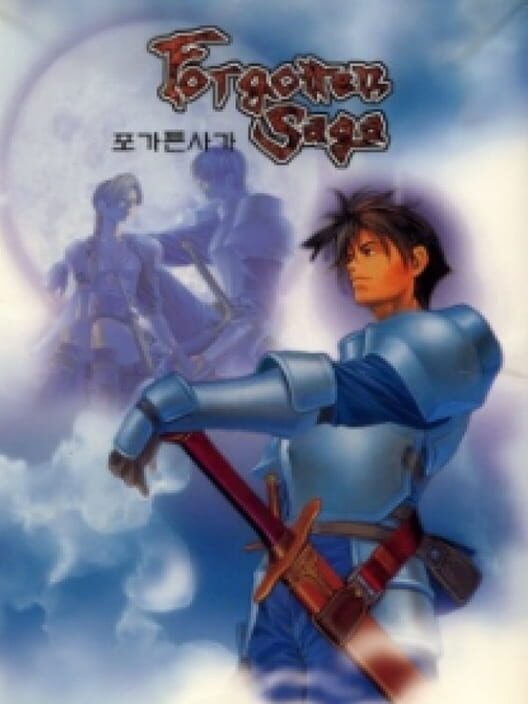
Forgotten Saga Cover

IGDB / 145572

Forgotten Saga

1997 Role-playing (RPG)
As kind of a side story, Forgotten Saga takes place in the same fictional universe as Astonishia Story, but the plots aren't interlinked and there aren't many shared characters save for Passman. While combat works similar as in Astonishia Story, there are a lot of surprising WRPG influences. In the beginning the main character's class is determined by a catalog of questions, just like in many Ultima games. Then three Show full summary

As kind of a side story, Forgotten Saga takes place in the same fictional universe as Astonishia Story, but the plots aren't interlinked and there aren't many shared characters save for Passman. While combat works similar as in Astonishia Story, there are a lot of surprising WRPG influences. In the beginning the main character's class is determined by a catalog of questions, just like in many Ultima games. Then three companions are picked from a variety of classes and typical fantasy races (Elves, Dwarves and Hobbits). Two more slots are available for more characters to join temporarily, or even replace some of the original companions for good. The game is much more nonlineal and open ended than most Far Eastern RPGs, every town holds a variety of sidequests, which often rely on character's classes or the party's reputation, which is raised by doing good deeds. On the other hand the game punishes what the writer deemed immoral behavious, taking inspiration once again from Ultima. For a good portion of the game there isn't even a real "main story" to follow, that only unfolds after solving many individual tasks. Player decisions often have a deep impact on the outcome of a quest. At one point, for example, the party gets caught by a dragon, but manages to escape, alongside many other prisoners. If the heroes then chose to chase and kill the dragon for its treasure instead of fleeing directly, the dragon escapes, killing all fleeing prisoners on the way. The game is also full of little touches, most notable the party doesn't follow the leader in a straight line like in most JRPGs, but in a losely tied bunch of individuals.

World design Nicht eindeutig GameplayRole-playing

Deep dive / Spielprofil

Everything about Forgotten Saga: story and gameplay

A structured look at the narrative, game feel, and traits that define this game.

Story & context
As kind of a side story, Forgotten Saga takes place in the same fictional universe as Astonishia Story, but the plots aren't interlinked and there aren't many shared characters save for Passman. While combat works similar as in Astonishia Story, there are a lot of surprising WRPG influences. In the beginning the main character's class is determined by a catalog of questions, just like in many Ultima games. Then three companions are picked from a variety of classes and typical fantasy races (Elves, Dwarves and Hobbits). Two more slots are available for more characters to join temporarily, or even replace some of the original companions for good. The game is much more nonlineal and open ended than most Far Eastern RPGs, every town holds a variety of sidequests, which often rely on character's classes or the party's reputation, which is raised by doing good deeds. On the other hand the gam Show full description

As kind of a side story, Forgotten Saga takes place in the same fictional universe as Astonishia Story, but the plots aren't interlinked and there aren't many shared characters save for Passman. While combat works similar as in Astonishia Story, there are a lot of surprising WRPG influences. In the beginning the main character's class is determined by a catalog of questions, just like in many Ultima games. Then three companions are picked from a variety of classes and typical fantasy races (Elves, Dwarves and Hobbits). Two more slots are available for more characters to join temporarily, or even replace some of the original companions for good. The game is much more nonlineal and open ended than most Far Eastern RPGs, every town holds a variety of sidequests, which often rely on character's classes or the party's reputation, which is raised by doing good deeds. On the other hand the game punishes what the writer deemed immoral behavious, taking inspiration once again from Ultima. For a good portion of the game there isn't even a real "main story" to follow, that only unfolds after solving many individual tasks. Player decisions often have a deep impact on the outcome of a quest. At one point, for example, the party gets caught by a dragon, but manages to escape, alongside many other prisoners. If the heroes then chose to chase and kill the dragon for its treasure instead of fleeing directly, the dragon escapes, killing all fleeing prisoners on the way. The game is also full of little touches, most notable the party doesn't follow the leader in a straight line like in most JRPGs, but in a losely tied bunch of individuals.

1 weitere Tags
Traitkorean rpg

Game profile / Plain language

Forgotten Saga: release, platforms, and facts

Studio, play style, releases, and official sources — compactly prepared from external IGDB data.

01
Studios & ownership

Studio & publishing

Developer
Sonnori
Publisher
Phantagram
Franchise
Standalone
02
So spielt es sich

Spielprofil

Modi
Single player
Perspective
Third person
Themes
Nicht angegeben
03
Wo & wann

Platform releases

  • PC (Microsoft Windows) Nov 1997

Prices / Stores

Compare Forgotten Saga prices and deals

Prices never affect your match ranking.

No live price for this game yet

The 36 price sources are now being checked in the background. Product prices found will appear automatically.

Physical & partner search

Search by edition and platform

1 / 3