
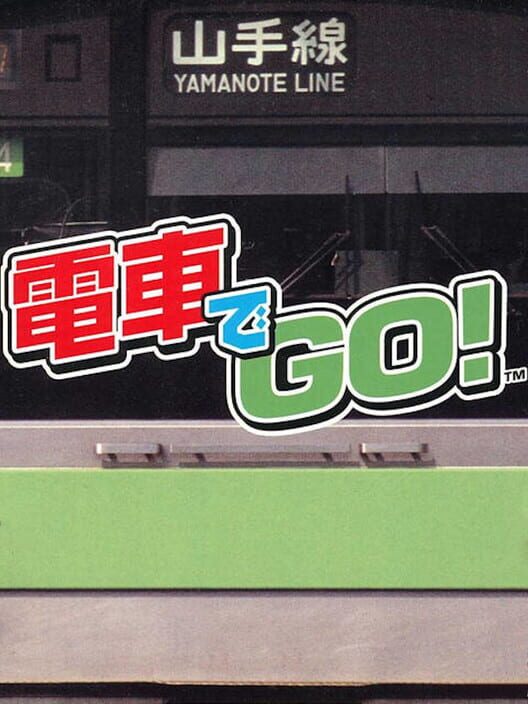
Densha de GO! Cover

IGDB / 43850

Densha de GO!

1997 Simulator
Densha de GO! is a 1997 train simulator arcade game developed and published by Taito in Japan. Players are tasked with driving a train, adhering to the schedule and obeying signals and speed restrictions. It features real-world train lines from Japan, including the Yamanote Line and Keihin-Tohoku Line. The game was ported to the PC, Sega Saturn, and PlayStation. The concept for Densha de Go! was inspired by designer Vollständige Kurzbeschreibung anzeigen

Densha de GO! is a 1997 train simulator arcade game developed and published by Taito in Japan. Players are tasked with driving a train, adhering to the schedule and obeying signals and speed restrictions. It features real-world train lines from Japan, including the Yamanote Line and Keihin-Tohoku Line. The game was ported to the PC, Sega Saturn, and PlayStation. The concept for Densha de Go! was inspired by designer Akira Saito's personal fascination with Japanese train lines and railroads. He wanted to create a game that allowed players to familiarize themselves with driving a train. The controls were his primary focus as he wanted them to be accurate and responsive, and to mimic the controls of a real train—his father worked for the Kyoto City Transportation Bureau Facilities Division, which made this easier to accomplish. Saito included real-world railroads and trains to appeal towards other railroad enthusiasts, thinking that it could also attract more "ordinary" players for its realistic, familiar theme. As arcades at the time were dominated primarily by racing and fighting games, he believed its unique concept could make it stand out. Densha de Go! is among Taito's most successful games, preceded only by Space Invaders. The PlayStation version sold over one million copies. The game was well-received by critics for its controls, attention to detail, and unique concept. Some felt that its home releases lacked enough content and had poor visuals. It was followed by a long series of sequels, spin-offs, and reimaginings, beginning with Densha de Go! 2 in 1999.

Weltdesign Nicht eindeutig

Detailanalyse / Spielprofil

Alles über Densha de GO!: Story und Spielprinzip

Ein strukturierter Blick auf Erzählung, Spielgefühl und die Eigenschaften, die dieses Spiel definieren.

Story & Kontext
Densha de GO! is a 1997 train simulator arcade game developed and published by Taito in Japan. Players are tasked with driving a train, adhering to the schedule and obeying signals and speed restrictions. It features real-world train lines from Japan, including the Yamanote Line and Keihin-Tohoku Line. The game was ported to the PC, Sega Saturn, and PlayStation. The concept for Densha de Go! was inspired by designer Akira Saito's personal fascination with Japanese train lines and railroads. He wanted to create a game that allowed players to familiarize themselves with driving a train. The controls were his primary focus as he wanted them to be accurate and responsive, and to mimic the controls of a real train—his father worked for the Kyoto City Transportation Bureau Facilities Division, which made this easier to accomplish. Saito included real-world railroads and trains to appeal towar Vollständige Beschreibung anzeigen

Densha de GO! is a 1997 train simulator arcade game developed and published by Taito in Japan. Players are tasked with driving a train, adhering to the schedule and obeying signals and speed restrictions. It features real-world train lines from Japan, including the Yamanote Line and Keihin-Tohoku Line. The game was ported to the PC, Sega Saturn, and PlayStation. The concept for Densha de Go! was inspired by designer Akira Saito's personal fascination with Japanese train lines and railroads. He wanted to create a game that allowed players to familiarize themselves with driving a train. The controls were his primary focus as he wanted them to be accurate and responsive, and to mimic the controls of a real train—his father worked for the Kyoto City Transportation Bureau Facilities Division, which made this easier to accomplish. Saito included real-world railroads and trains to appeal towards other railroad enthusiasts, thinking that it could also attract more "ordinary" players for its realistic, familiar theme. As arcades at the time were dominated primarily by racing and fighting games, he believed its unique concept could make it stand out. Densha de Go! is among Taito's most successful games, preceded only by Space Invaders. The PlayStation version sold over one million copies. The game was well-received by critics for its controls, attention to detail, and unique concept. Some felt that its home releases lacked enough content and had poor visuals. It was followed by a long series of sequels, spin-offs, and reimaginings, beginning with Densha de Go! 2 in 1999.

3 weitere Tags
Merkmaljapan only Merkmaltrain simulator Merkmalufo

Ansehen / Trailer

Gameplay Video

Trailer-Metadaten von IGDB, Wiedergabe über YouTube im erweiterten Datenschutzmodus.

Spielprofil / Klartext

Densha de GO!: Release, Plattformen und Fakten

Studio, Spielweise, Veröffentlichungen und offizielle Quellen – kompakt aus den externen IGDB-Daten aufbereitet.

01
Studios & Rechte

Studio & Veröffentlichung

Entwickler
Taito GM R&D Sect. #2
Herausgeber
Taito, UNBALANCE
Franchise
Densha de go
02
So spielt es sich

Spielprofil

Modi
Single player
Perspektive
First person
Themen
Non-fiction
03
Wo & wann

Plattform-Veröffentlichungen

  • Arcade Mar 01, 1997
  • PC (Microsoft Windows) Apr 23, 1999
  • PlayStation Dec 18, 1997

Preise / Shops

Densha de GO! Preise und Angebote vergleichen

Preise beeinflussen niemals die Trefferrangfolge.

Noch kein Livepreis für dieses Spiel

Die 36 Preisquellen werden jetzt im Hintergrund geprüft. Gefundene Produktpreise erscheinen automatisch.

Physische Shop-Suche

Edition und Plattform gezielt suchen

1 / 12